About the course
How communities, organisations and public institutions can shift from reactive problem-solving toward more regenerative ways of working and decision-making.
From systems of control to cultures of resilience and reconciliation — governance designed for living systems.
This programme runs online with a live cohort. Full curriculum and registration details are edited in the admin.
What you’ll learn
Learning objectives
By the end of the course, participants will be able to:
1 - Understand the different governance paradigms and their implications for organisations, businesses, municipalities, and territories.
2 - Become familiar with the first four phases of organisational and community governance cycles from a regenerative lens.
3 - Apply a decolonial and intersectional lens to governance processes and structures, recognising patterns of structural violence, power concentration and social exclusion, and how to transform them.
4 - Design small but catalytic interventions that shift governance processes and structures towards more distributed and place-based approaches.
5 - Work from the unique qualities, relationships and potential of place, using governance as a means to support the long-term vitality and coherence of our organisations, businesses, municipalities and territories.
Your facilitators
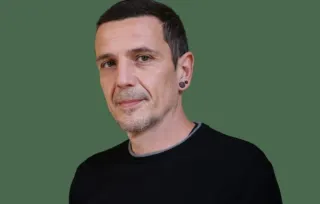
Co-founder of Resilience.Earth and a bioregional governance practitioner working at the intersection of territorial strategy, cooperative ecosystems, and regenerative system design. With nearly three decades of experience accompanying municipalities, rural networks, and community-led initiatives, he focuses on redesigning governance structures to distribute power, activate subsidiarity, and cultivate living territorial ecosystems.
His approach is deeply influenced by Carol Sanford’s regenerative paradigm and the work of Regenesis, grounding governance in the essence and evolutionary potential of place. Òscar works structurally — evolving architectures of decision-making so that communities can metabolise complexity rather than centralise control.
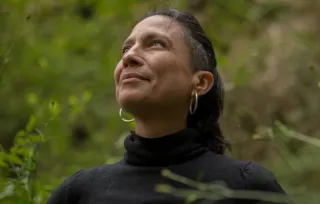
Co-founder of Resilience.Earth and a regenerative practitioner specialising in community development, identity healing, and collective processing at territorial scale. Her work weaves decolonial and intersectional lenses with Quechua Indigenous knowledge systems to support communities in reconciling historical trauma, restoring memory, and reclaiming collective agency.
Drawing from regenerative theory as well as ancestral and relational worldviews, Erika focuses on the cultural and relational dimensions of governance, ensuring that transformation is not only structural, but embodied in narrative, reciprocity, and lived practice. Her approach invites governance to evolve not only in design, but in consciousness and belonging.
Dates & registration
26
2026
Session October 2026
26 Oct 2026 – 11 Dec 2026 · Online